
Subscribe to continue reading
Subscribe to get access to the rest of this post and other subscriber-only content.
Subscribe to get access to the rest of this post and other subscriber-only content.
One of my rules when I first moved to Chicago was that if I want to see or do something in this city, the only thing holding me back should be my time, money, or energy. I regret that, in my marriage, I would often not do things simply because my husband didn’t want to. After we separated, I vowed not to stay unhappy to sustain a future relationship.
When I moved here, I let Mitch know that he is welcome but not obligated to join me on my outings. While he was at work, I’d hop a train or bus and go exploring. I’ve visited an insect sanctuary, toured the Puerto Rican and Swedish heritage museums, lost my way in Humboldt Park, ridden bicycles along the 606, photographed Tiffany lamps in a 19th-century mansion, and eaten in a falafel shop in the back of a jewelry store. I know how to show myself a good time.
But I also enjoy spending time with Mitch, so when he asked if I could save my plans to visit the Art Institute of Chicago until he could join me, I happily agreed. And then came the holidays, the flu, and below-freezing weather. But last Sunday, we made good on our plans, and it was well worth the wait.
I’d been champing at the bit to go because I didn’t want to miss their Bruce Goff exhibit. Many years ago, my interest in unusual houses led me to discover Goff, an architect who studied with Frank Lloyd Wright, but whose aesthetic sensibilities seem to come from outer space. If I believed that extraterrestrials have lived among us, Bruce Goff would make my shortlist of suspects.
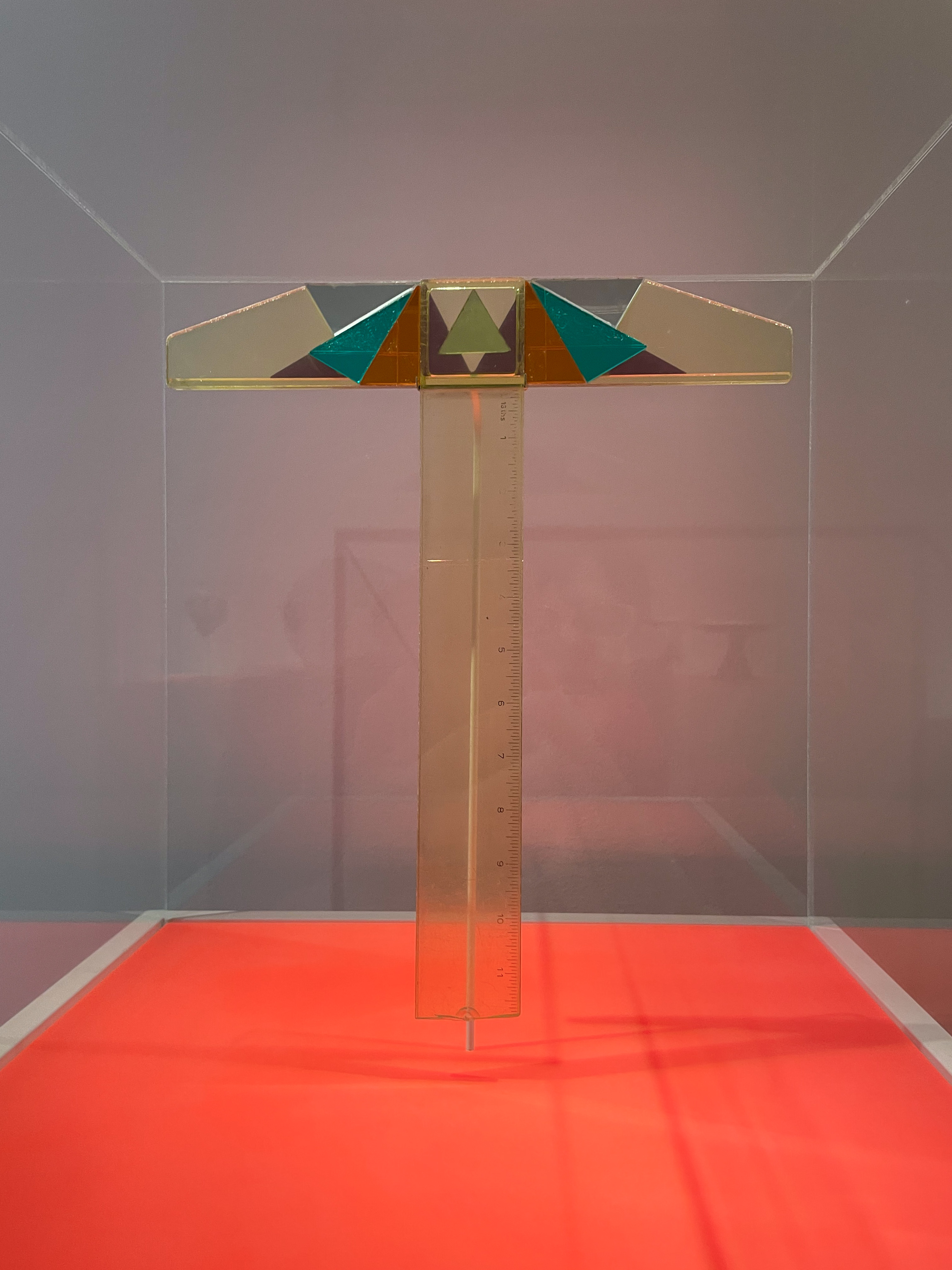
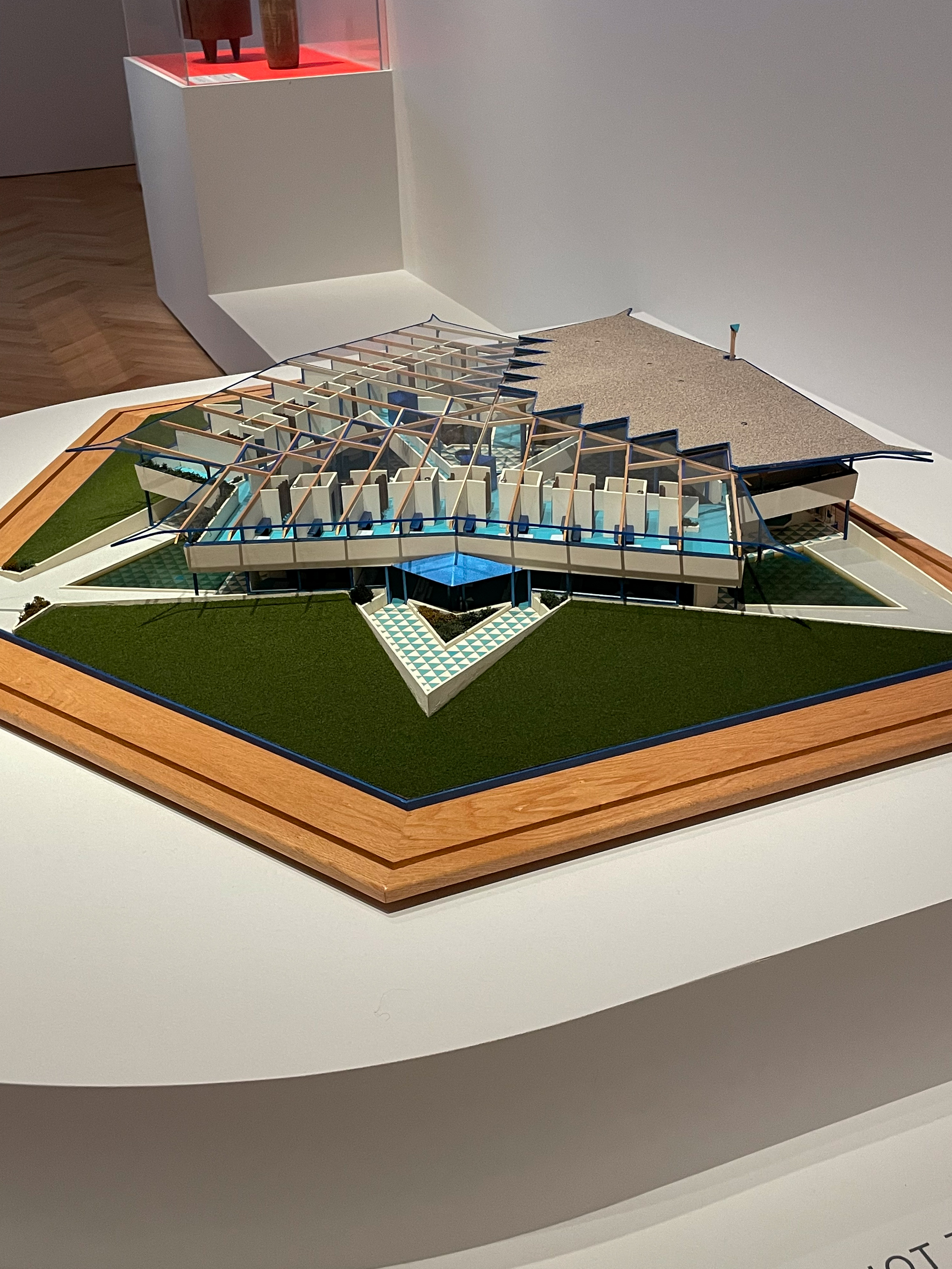
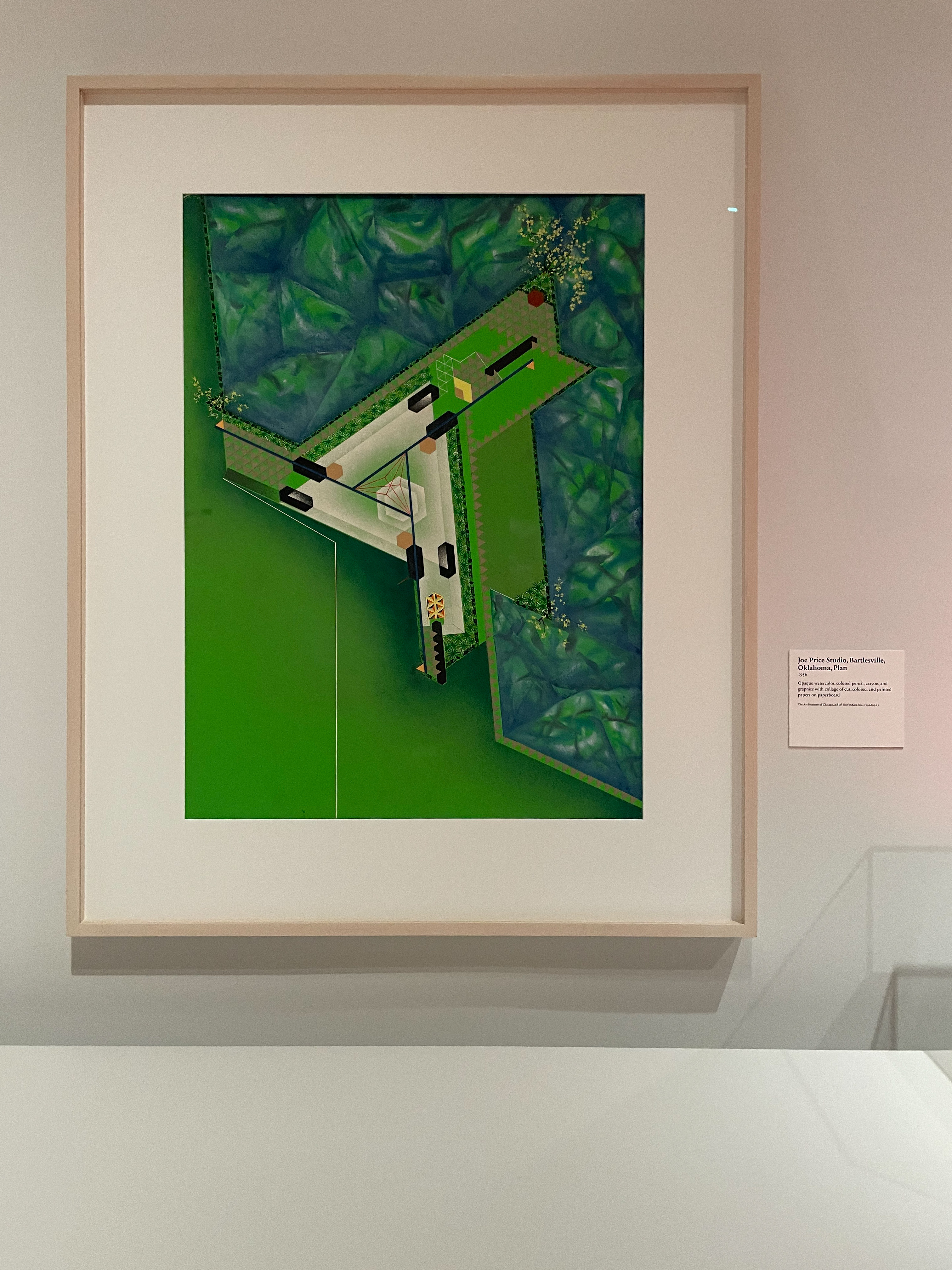
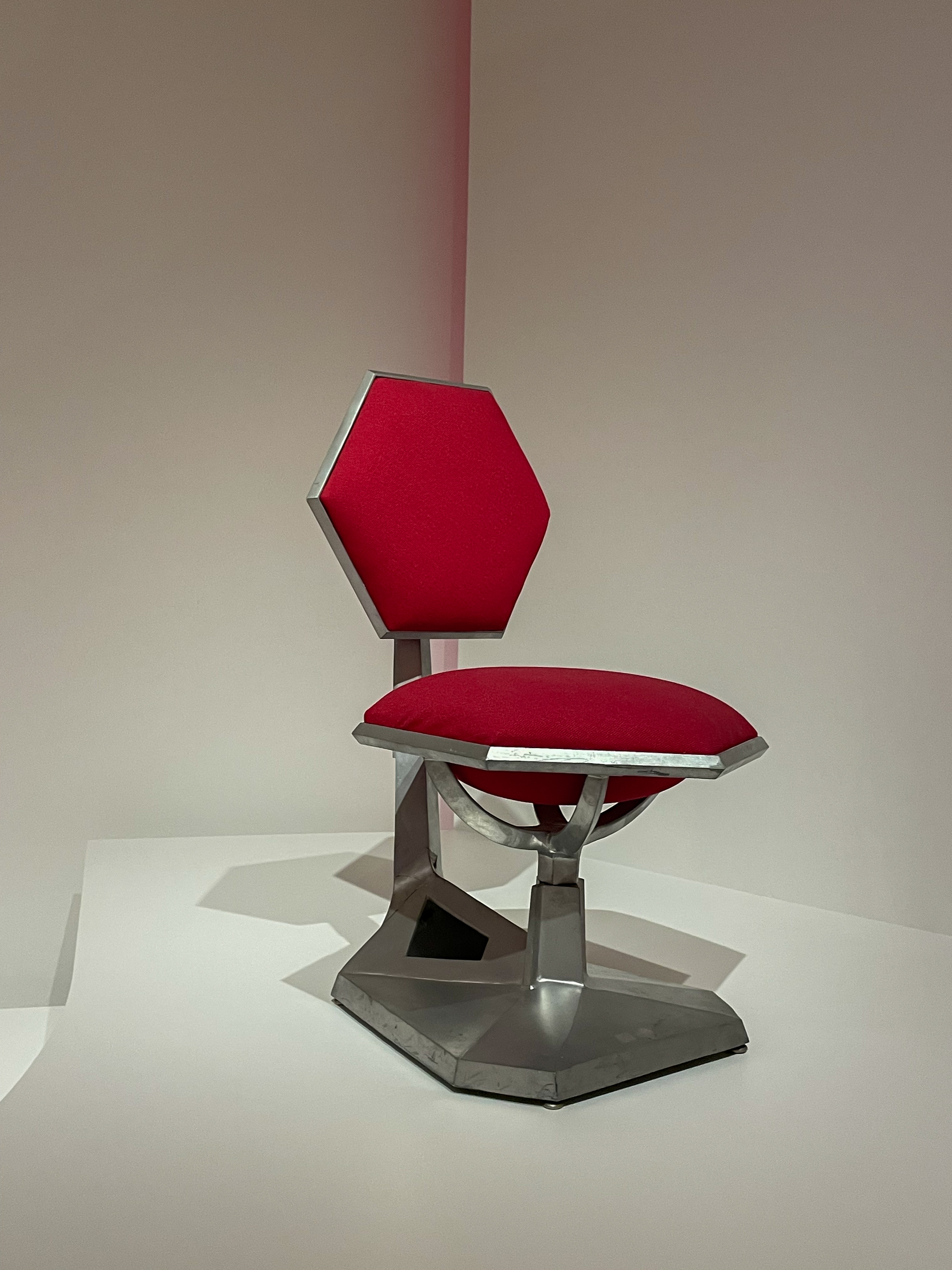
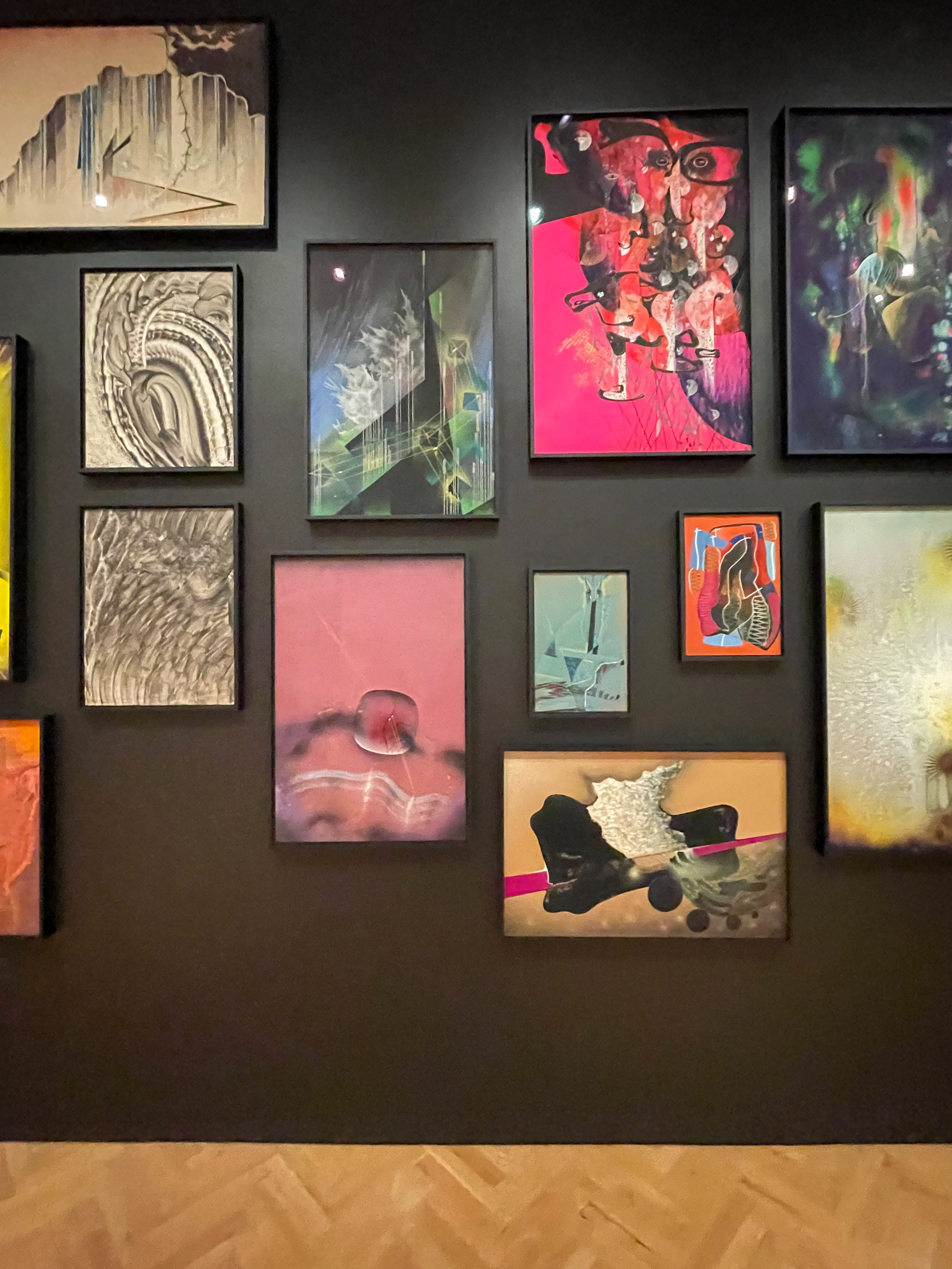
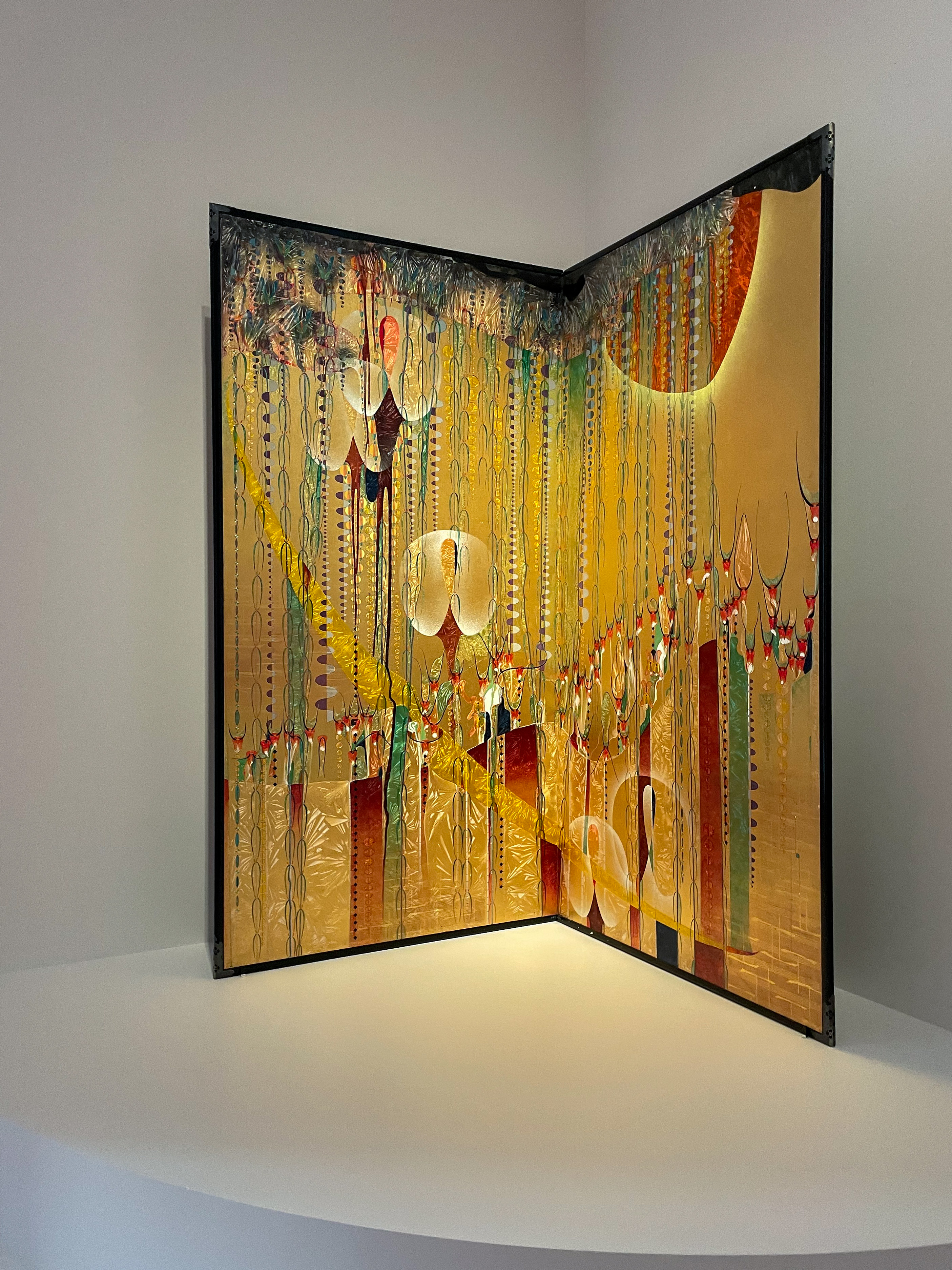
The exhibit not only featured photos, plans, and models of his buildings, but his paintings, custom furniture, and personal belongings, including a player piano running one of his custom piano rolls. Goff had a love for geometric shapes and modern, synthetic materials, especially shiny and colorful ones. He even customized his T-square and blueprint case with mirrored tiles.
Most of Goff’s houses were built in Oklahoma and Illinois, many of them featuring hexagonal conversation pits. Unfortunately, not many remain standing. I can imagine they’re difficult to maintain; replacing the custom windows alone would be expensive. But I can’t imagine being rich and wanting a bland McMansion when I could live in an alien silo with bubble windows.
After I’d seen the Bruce Goff exhibit and the Thorne miniature rooms, I let Mitch lead the way. We were on the same page about skipping some exhibits in the interest of time – I don’t hate Medieval European art, but if I had to choose between a gallery of modern art or a gallery of creepy Christ babies that look like tiny old men, I’ll always pick the former. I could tell when there was something around the next corner he really wanted me to see, and I’ll admit that every time, I was delighted.
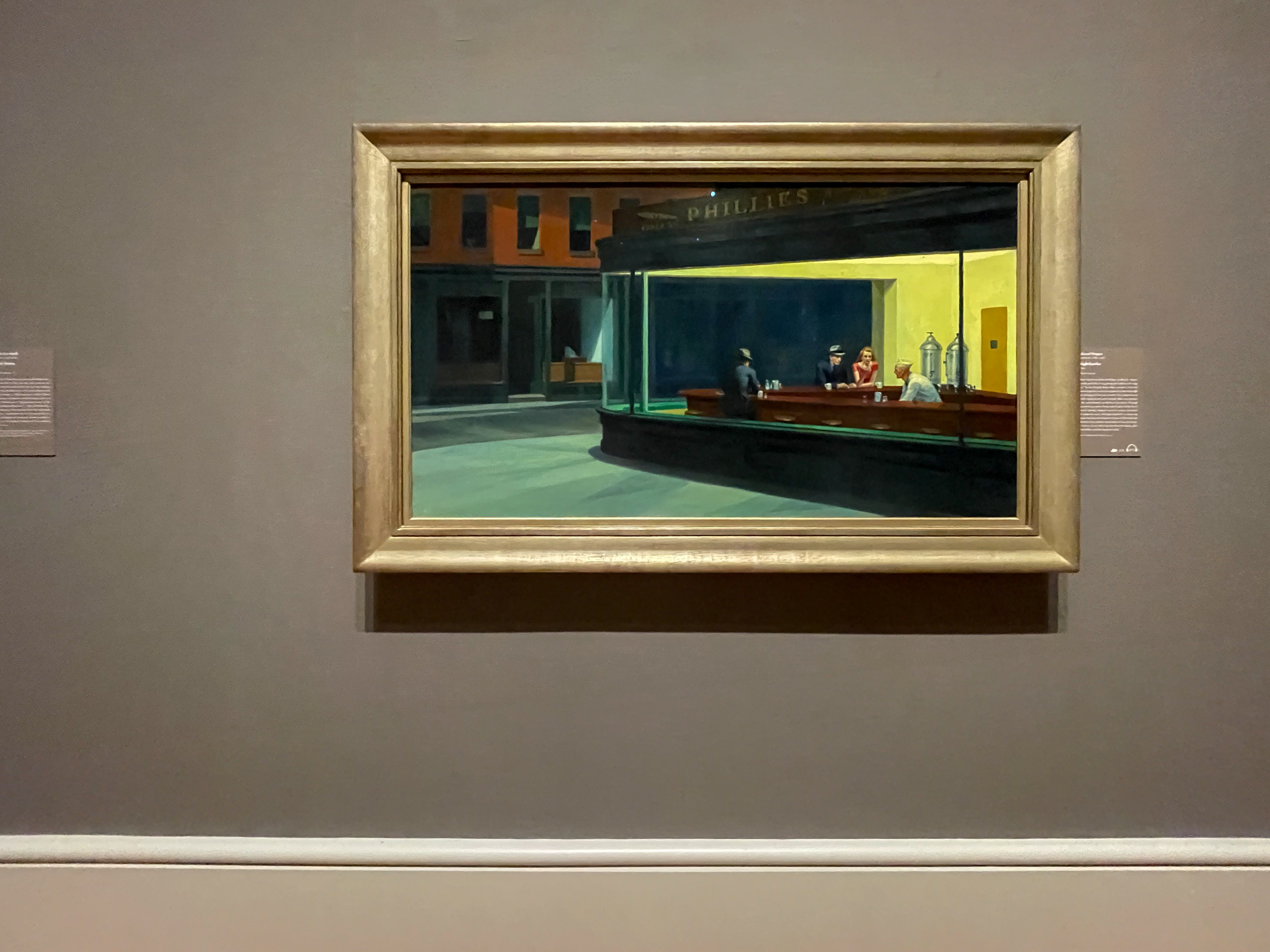
If I thought I was too old to be impressed by anything, I was proven wrong every time I saw a famous painting up close in person. A Sunday on La Grand Jette, Nighthawks, The Treachery of Images, American Gothic, The Child’s Bath, and too many others eroded any lingering delusions that I’m a jaded grump who’s seen it all. Impressionist paintings are cooler when you can see the texture of the brushstrokes. I was actually tearing up while gazing upon a few works, which might be a response to the current onslaught of AI-generated images and my renewed appreciation for work made by human beings. Generative AI can mimic existing artistic styles, but lack the ingenuity to create new ones.
“So, uh, I’ve started a blog again,” I said. “The audience is old friends who met me through online journaling and chat rooms.” (I didn’t want to explain what distinguished a talker from other forms of chat rooms, but I thought fondly of lively conversations on Somewhere Else and Cirrus Nebula.)
“That’s good!”
“I may write about you. Nothing too personal, definitely nothing intimate. But I can’t think of a good pseudonym for you. And you will likely appear in parts of my life I want to write about, so…”
“This is for your friends?”
“I have no plans or illusions about amassing tons of followers.”
“Just use Mitch,” he said, easily solving the dilemma I had created.
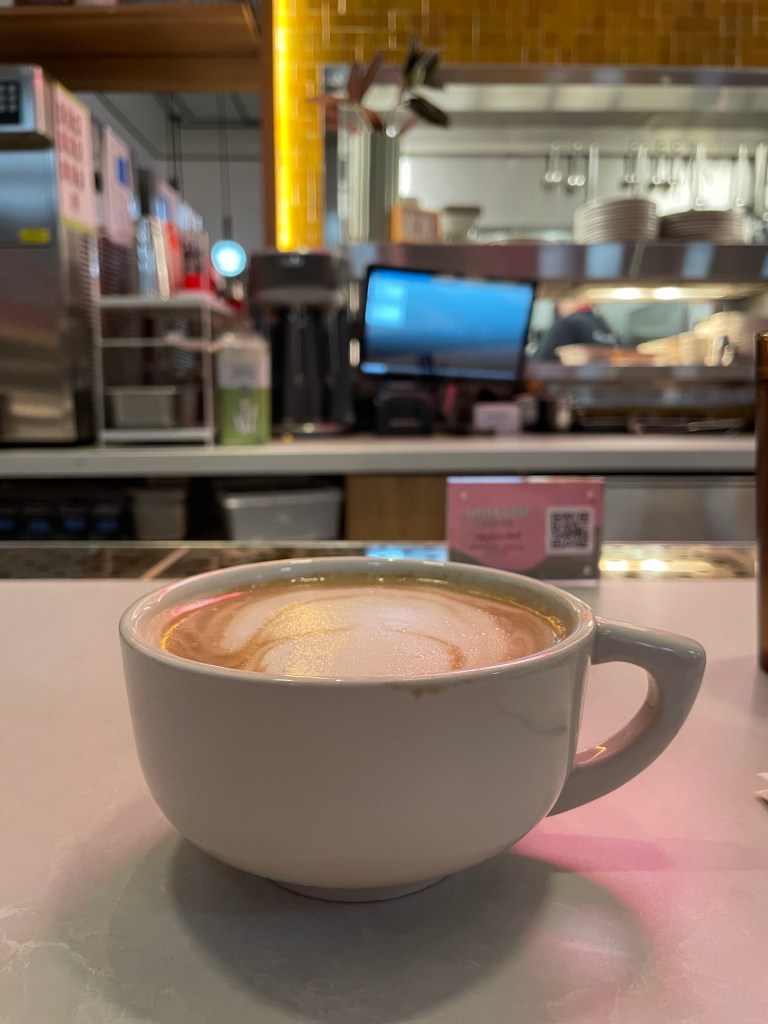
Mitch and I were having dinner at the counter of Little Goat Diner, our current favorite place to eat before and after seeing movies at the Music Box. We bought tickets to see Lady Windermere’s Fan, a 1925 silent movie directed by Ernst Lubitsch. The 35mm film was accompanied by a live pianist.
I’m not going to become a film purist — purism can quickly become a synonym for unreasonably high expectations — but after years of digital projections, it’s fun to observe the subtle differences with film projections. There’s a shimmery quality as the frames flicker past. Shadows are richer, because you’re seeing the physical impediment of light through a substance rather than an absence of HSV values. And, particularly in the AI slop era, the crackles and imperfections are pleasant reminders that human beings touched every part of the process. I enjoy pristine digital restorations, too, though, and appreciate the work that people put into preserving movies.
The movie, based on an Oscar Wilde play but completely rewritten for silent film, was an enjoyable, humane comedy about misunderstandings and reputations among British society members. Irene Rich was the standout as the maligned but effervescent Mrs. Erlynne. And, yes, the fan does feature prominently in the story.
This is only my second Lubitsch movie, following 1933’s pre-Code film Design for Living, where Miriam Hopkins forms a throuple with Fredric March and Gary Cooper. Pre-Code movies are interesting.
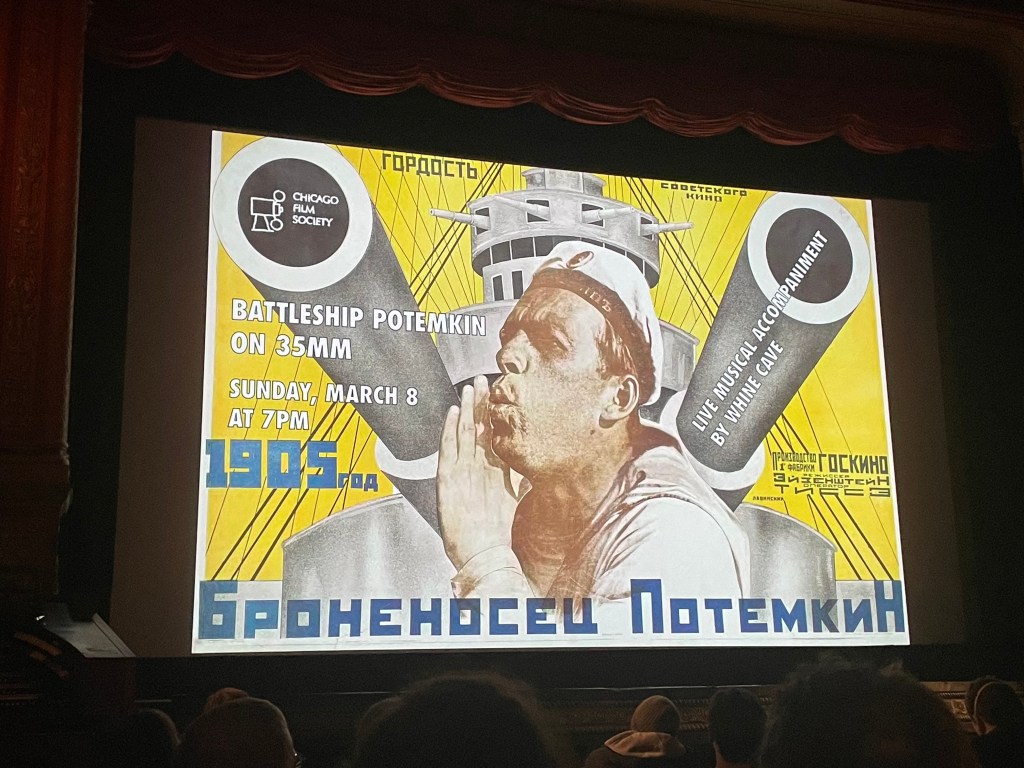
Mitch and I take turns playing the straight man and the comic. Last night, The Chicago Film Society had a slideshow before the movie, promoting their upcoming films for the season, one of which was for Sergei Eisenstein’s Battleship Potemkin.
“Did you know 1925 Soviet audiences ran out of the theater because they thought the baby carriage was coming at them?” I asked.
I thought he was going to tell me that accounts of people running from projections of oncoming trains were most likely apocryphal stories spread by early 20th century marketing folks, but instead he said, “That poster was totally made with AI — look at that unreadable text!”
He won that round.
Subscribe to get access to the rest of this post and other subscriber-only content.

